eProjects
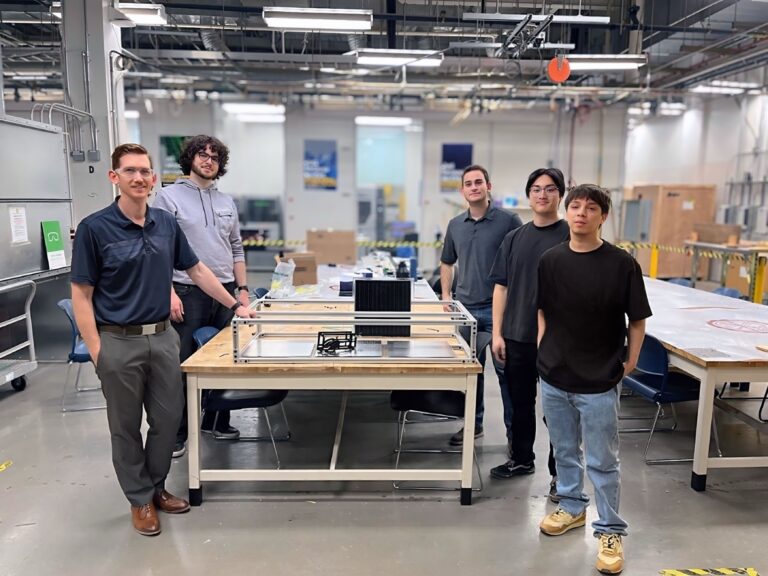
Automated Material Removal for Next-Gen Solar Modules
Sunflex Solar is developing a new method for fabricating back-contact solar panels, using aluminum as a conductor. To separate the positive and negative poles, a trace is cut in the aluminum and pulled to break continuity. This team is building a prototype to improve the process of peeling these traces. The design incorporates a suction…
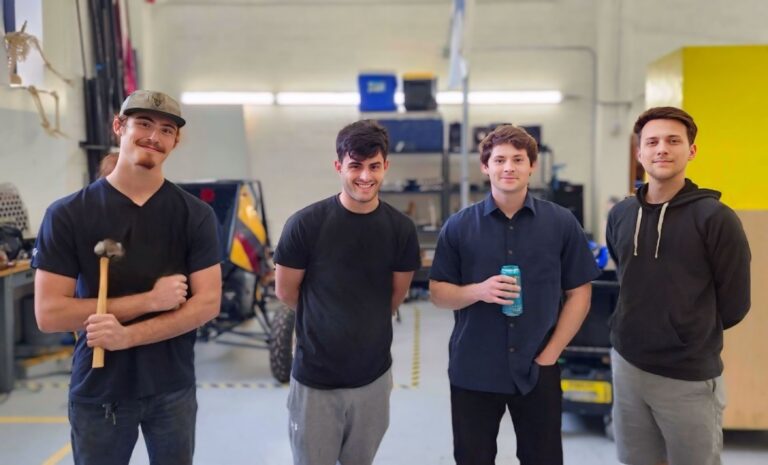
Creating Additively Manufactured Parts from Traditional Welding
Los Alamos National Laboratory, or LANL, needed a scalable, cost-effective method for rapid metal prototyping. This team developed a CNC-based Wire Arc Additive Manufacturing, or WAAM, system with a dual Z-axis gantry for improved stability and precision. Powered by Dynomotion controllers, the system allows for future upgrades. Custom G-code and optimized toolpaths ensure efficient metal…

Algae Pond Automation for Biomass Harvesting
This team, Algae Pond Automation, has been collaborating with the Arizona Center for Algae Technology Innovation, or AzCATI, to automate one of their algae ponds. The current manual management of the pond requires up to two hours of work for a single person, including tasks like draining, refilling with nutrient media and measuring water depth….

Battery Cell Subassembly Automation
This team is collaborating with Wisk Aero, an aerospace manufacturer in Mountain View, CA, to develop an automated assembly line for battery packs powering their Generation 6 eVTOL aircraft. The team focuses on automating the stacking and installation of battery cells, a process that currently requires manual loading. The solution involves a SCARA robot with…
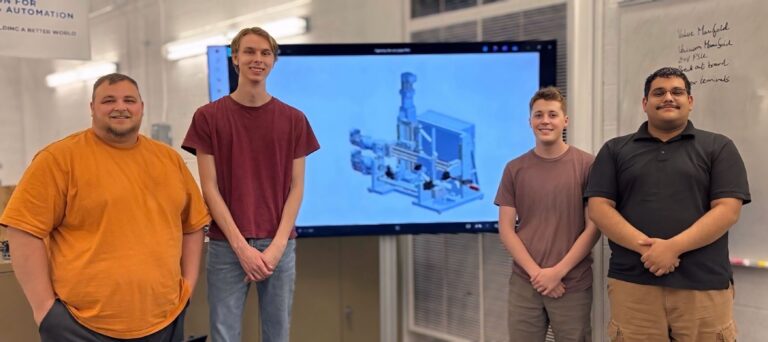
Manufacturing Integration Problem
Savannah River Nuclear Solutions, or SRNS, is improving pit production with a mobile, automated LIBS system for real-time, non-destructive defect detection. Replacing slow, costly destructive testing, the system enables immediate defect identification before additional costs accrue. It includes a coaxial optical path, rotating sample fixture and radiation-shielded design to ensure accuracy and durability. This solution…
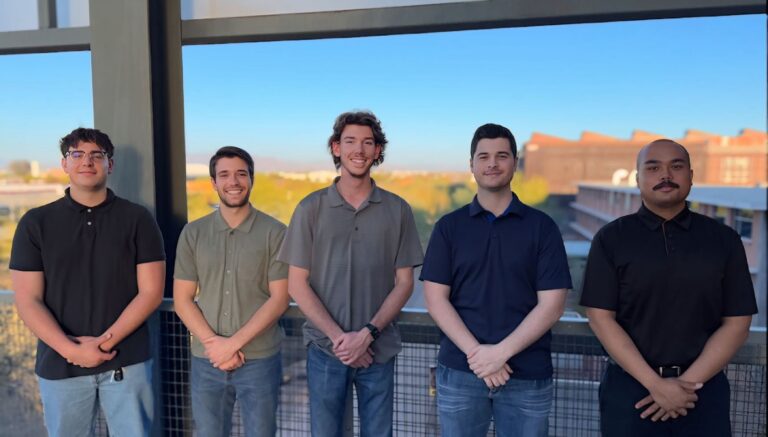
Small Hydrogen Vehicle Refueler
This team, in collaboration with Honeywell Aerospace, is developing a compact hydrogen refueling station for small drones. The goal is to create a system for the safe and efficient generation and storage of hydrogen in standard pressure containers, while focusing on minimizing weight, size and hydrogen loss. Existing market solutions are often too large or…
Hydrogen-Powered Delivery Drone
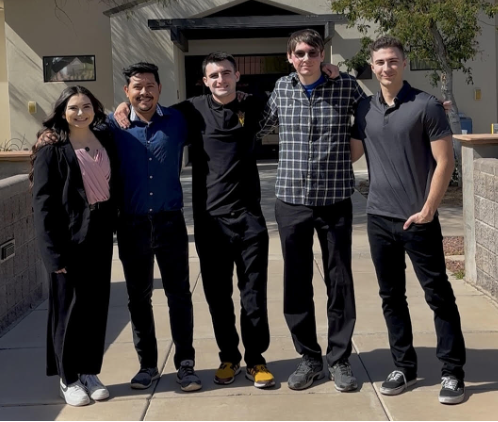
This team is working with Honeywell to design and test a new delivery drone powered by a hydrogen fuel cell, addressing the challenges of limited range and long charging times faced by battery-powered drones. The team aims to recycle waste heat from the fuel cell to maintain optimal food temperatures, ensuring high-quality deliveries without compromising…
Glovebox Material Handling System
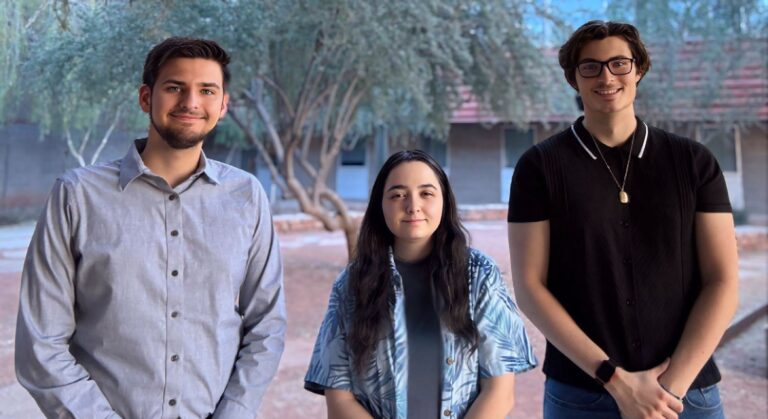
This team is collaborating with Los Alamos National Laboratory, or LANL, to develop an auxiliary transportation system for safely transferring hazardous materials between gloveboxes. LANL uses gloveboxes to prevent radioactive exposure, and the material transfer process must match this level of safety and sophistication. The team’s solution uses industrial pneumatics to efficiently deliver materials between…
Quick Change Vacuum Chuck
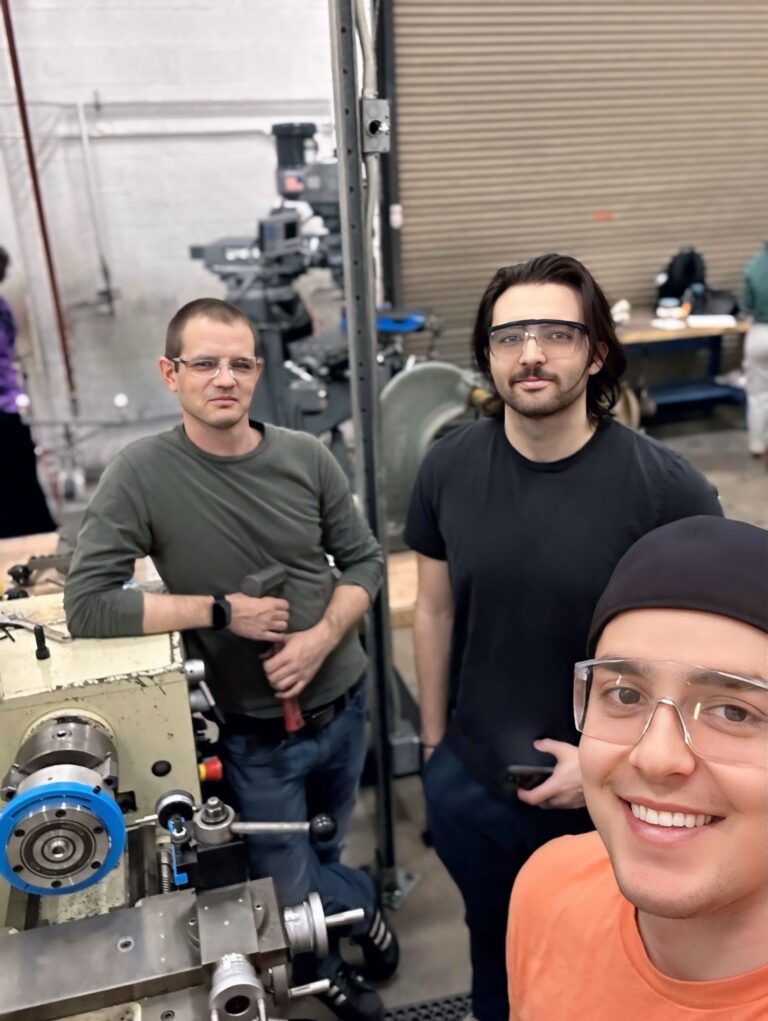
This team is working with the Savannah River Plutonium Processing Facility, or SRPPF, to develop a quick-change workholding solution for their vacuum-based pot chucks. The current fixturing process is time-consuming and requires manual adjustments to align parts concentrically with the lathe axis. The project aims to design, prototype and test a solution that enables fast,…

Robotically Assisted Exoskeleton for Glovebox Operators
This team is collaborating with Los Alamos National Laboratory, or LANL, to develop a wearable robotic exoskeleton that reduces operator fatigue caused by prolonged use of gloveboxes in plutonium handling. LANL researchers face significant muscle strain due to unnatural arm and shoulder positions required by these devices. The project aims to improve portability, usability and…