Engineering Projects in Community Service (EPICS)
Solving problems on a global scale
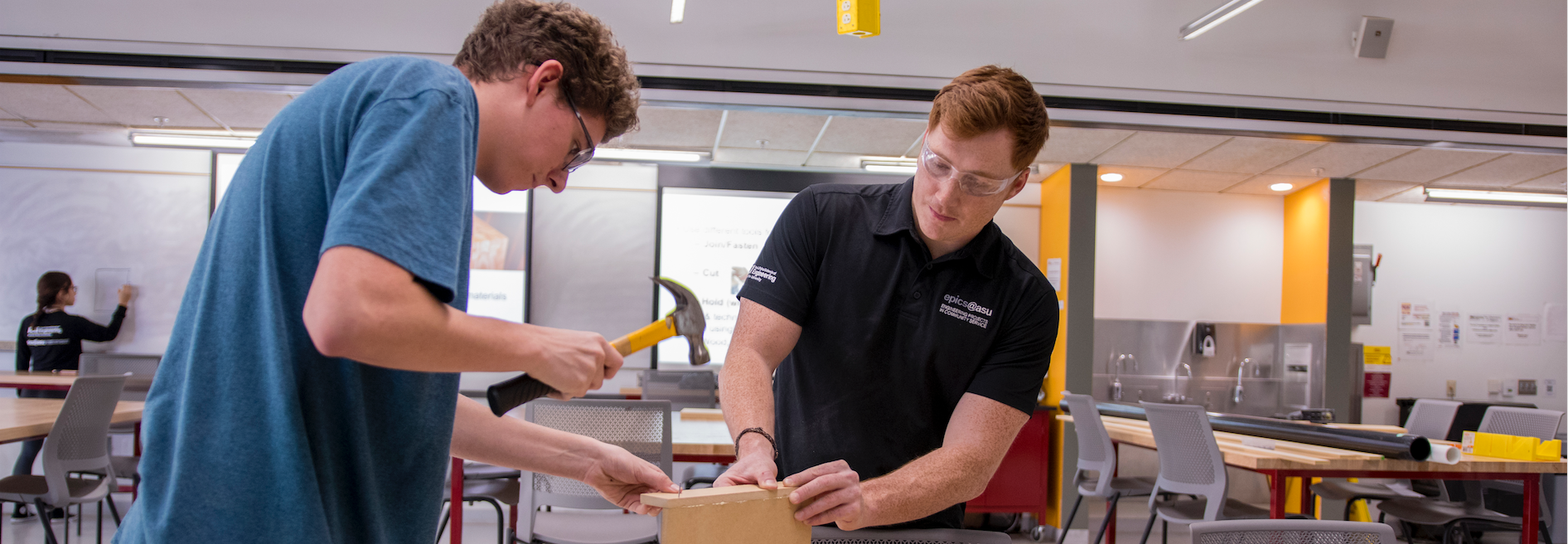
The Engineering Projects in Community Service program, known as EPICS, is a national award-winning social entrepreneurship program. Teams design, build and deploy systems to solve engineering-based problems for charities, schools and other not-for-profit organizations. Our students aren’t waiting to graduate to make a difference—they are tackling real-world problems today.
Using a service-learning model, EPICS student teams take on project assignments in collaboration with a not-for-profit entity. The sequence of courses cover feasibility and planning, design and build, and implement and install. Projects generally last a year or more, with teams of 4-5 members.
Partnering with EPICS
The EPICS program offers opportunities for students to solve real world problems and make a significant difference through working with various organizations. Contact Jared Schoepf, EPICS Director, for more details.
Capstone projects – Spring 2026
-
Access to training equipment for mobility assessments can be limited for individuals preparing to qualify for powered wheelchairs. This project addresses that challenge by developing a device that converts a manual wheelchair into an electric system. The design provides a…
-
Access to STEM education can be limited in remote communities, reducing opportunities for hands-on learning. This project addresses that challenge by supporting the Firewheel STEM Institute through the development of a portable 3D viewer. The device is designed to teach…
-
Providing reliable neonatal care in resource-limited settings can be challenging due to cost and infrastructure constraints. This project addresses that challenge by developing a low-cost neonatal incubator designed for use in rural Ghana. The system maintains a stable thermal environment…
Save the date for the Fall 2026 Innovation Showcase
Friday, Dec. 4, 2026
Sun Devil Fitness Complex, ASU Polytechnic campus
This event is part of the Polytechnic Student Showcase Week.
More